WhatsApp Business API in India (2026): Enterprise Pricing, Architecture & Compliance Guide
WhatsApp Business API is not a messaging upgrade. It’s a revenue infrastructure decision. Indian enterprise teams running multi-agent support, CRM-integrated automation, and broadcast campaigns at scale have one channel consistently outperforming everything else open rates above 90%, read times under three minutes, and two-way conversation depth no other platform delivers.
This guide covers the complete WhatsApp Business API in india 2026 architecture: pricing, limits, compliance, and deployment.
What Is WhatsApp Business API IN 2026?
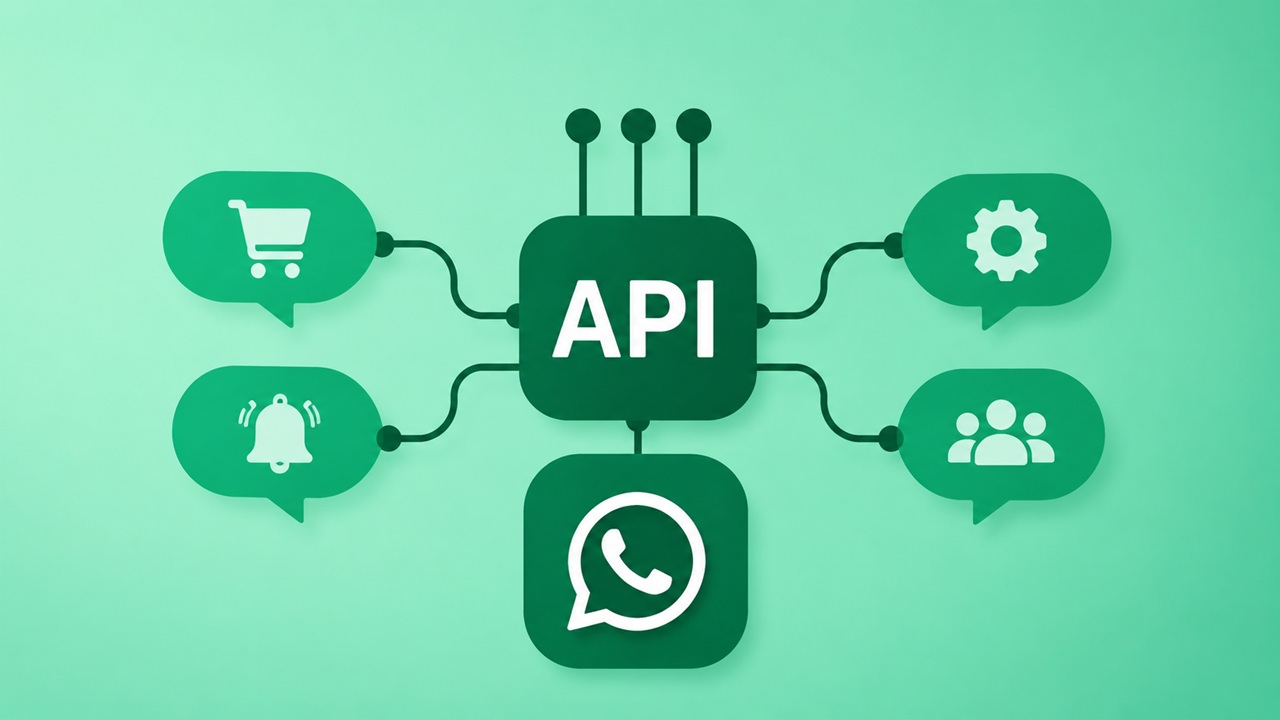
WhatsApp Business API is Meta’s server-side programmatic interface that allows enterprises to send and receive WhatsApp messages at scale through verified business accounts, automated workflows, CRM integrations, and multi-agent inboxes – without any of the restrictions built into the consumer WhatsApp Business App.
Deploying this programmatic ecosystem requires aligning your channel configuration with a unified Cloud Communication platform that can scale dispatch volumes smoothly. This is not a small distinction. It defines your entire deployment architecture.
What WhatsApp Business API Is NOT
Before teams invest in a deployment, they consistently confuse three different WhatsApp products:
| Product | Who It’s For | Multi-Agent? | CRM Integration? | Automation? |
| WhatsApp (consumer app) | Individual users | No | No | No |
| WhatsApp Business App | Small businesses, sole traders | No (linked devices only) | No | No |
| WhatsApp Business API | Enterprises, mid-market businesses | Yes, unlimited agents | Yes, full webhook support | Yes, fully programmatic |
The rule of thumb is simple: if your business sends more than 500 messages per month, has more than one person handling customer conversations, or has any automation requirement at all, you are in API territory. The Business App will not scale. It is not designed to.
WhatsApp Business API vs. WhatsApp Business App vs. WhatsApp Cloud API
These three terms are often used interchangeably by vendors. They describe fundamentally different products. Mixing them up during procurement has cost Indian enterprises months of misdirected effort.
| Capability | WhatsApp Business App | WhatsApp Business API (cloud) |
| Multi-agent access | ❌ No | ✅ Yes |
| CRM integration | ❌ No | ✅ Yes |
| Webhook delivery | ❌ No | ✅ Yes |
| Programmatic broadcast | ❌ No | ✅ Yes |
| Message template approval | ❌ No | ✅ Required |
| Conversation-category pricing | ❌ No | ✅ Applies |
| WhatsApp Flows | ❌ No | ✅ Yes |
| Official business verification | Optional | ✅ Required |
WhatsApp Cloud API vs. On-Premise API: A Decision Meta Made for You
This used to be a real architectural choice. It no longer is.
The On-Premise API required enterprises to self-host Docker containers running Meta’s proprietary messaging client on their own infrastructure. Meta officially sun setted it on October 23, 2025. The final supported version expired that day. No new deployments. No new accounts. Done.
| ACTION REQUIRED: If your current WhatsApp infrastructure was deployed before October 2025, confirm with your BSP (Business Solution Provider) whether you were migrated to Cloud API. Silent failures after an unsupported version expiry are a known risk. |
What Cloud API Gives You Instead
WhatsApp Cloud API is Meta’s fully hosted RESTful messaging service. The operational implications for enterprise teams are significant:
- Infrastructure managed by Meta: No Docker containers, no proprietary client maintenance, no server-side patching.
- 9% uptime SLA: With sub-5-second p99 latency on message delivery.
- Automatic API version management: Meta pushes updates to their infrastructure, though your integration layer still needs to track Graph API version deprecations.
- SOC 2, SOC 3, GDPR, and LGPD certified: Relevant for regulated-sector compliance assessments.
Why Enterprise Teams Choose WhatsApp Business API Over Every Other Messaging Channel
The channel performance numbers are not close. WhatsApp consistently delivers 90–98% message open rates, with most messages read within three minutes of delivery. Email marketing in India runs 15–25% open rates under good conditions. SMS delivers slightly better open rates than email but with no read confirmation, no two-way conversation capability, and increasing deliverability problems as telecom spam filters tighten.
WhatsApp has 3.3 billion monthly active users globally, with India representing the single largest national user base. That figure matters less than what it implies behaviourally: your customers already use WhatsApp every day, often dozens of times. A message arriving there arrives in the same interface they use to talk to family. That is a fundamentally different context than an email inbox or an SMS notification tray.
That said, WhatsApp is not a complete replacement for every channel. For low-connectivity regions, high-volume transactional updates should run alongside bulk SMS Gateway as a delivery fallback. The two channels are complementary, not competitive.
Enterprise Sectors Driving WhatsApp Business API Adoption in India
WhatsApp Business API adoption in India is not uniform across sectors. The strongest deployments share a common pattern: high conversation volume, time-sensitive information, and an existing dependency on call centre or email channels that are underperforming. Here is where the impact is clearest.
1. Banking, Financial Services, and Insurance (BFSI)
The BFSI sector was among the first to deploy WhatsApp API at scale, driven by the combination of high transaction volume and strict compliance requirements. Use cases that have moved significant call centre volume to WhatsApp include:
- Loan application status updates and document collection via WhatsApp Flows
• Policy renewal reminders with one-tap confirmation buttons
• OTP delivery replacing SMS with measurably higher delivery rates
• Payment confirmation and receipt delivery
• KYC verification workflows with document upload capability
The compliance consideration specific to BFSI: WhatsApp Cloud API’s Cloud API Local Storage for India is directly relevant to RBI data localization guidance. See Section 14 for the full architecture detail.
2. E-Commerce and Direct-to-Consumer Brands
Post-purchase communication is where WhatsApp delivers the clearest measurable lift over email and SMS. The entire purchase journey from order confirmation through delivery now runs on a single channel for leading D2C brands:
• Order confirmation with itemized receipts
• Shipping updates with carrier tracking integration
• Delivery notifications with one-tap feedback collection
• Abandoned cart re-engagement (within the 24-hour CSW where utility message rates apply)
• Post-purchase review requests and repeat purchase prompts
3. Real Estate
Real estate has one of the longest consideration cycles of any sector, and WhatsApp has proven effective at compressing it. The ability to qualify leads, schedule site visits, collect documents, and send payment milestone notifications on a single channel instead of the fragmented email-and-phone workflow that previously dominated is the core value proposition here.
4. Edtech
Education platforms face a specific challenge: their users (students and parents) are highly responsive to WhatsApp but poorly served by email. Admission process updates, fee reminders, live class alerts, and student support queries have all migrated effectively to WhatsApp with the added benefit of reducing inbound support volume through structured automated flows.
5. Healthcare:
WhatsApp Business Api for healthcare sector use cases are:
- Appointment confirmations
- prescription reminders
- lab result notifications
patient follow-up – all within a HIPAA-adjacent encrypted channel.
How WhatsApp Cloud API Works: The Architecture Every Enterprise Team Must Understand
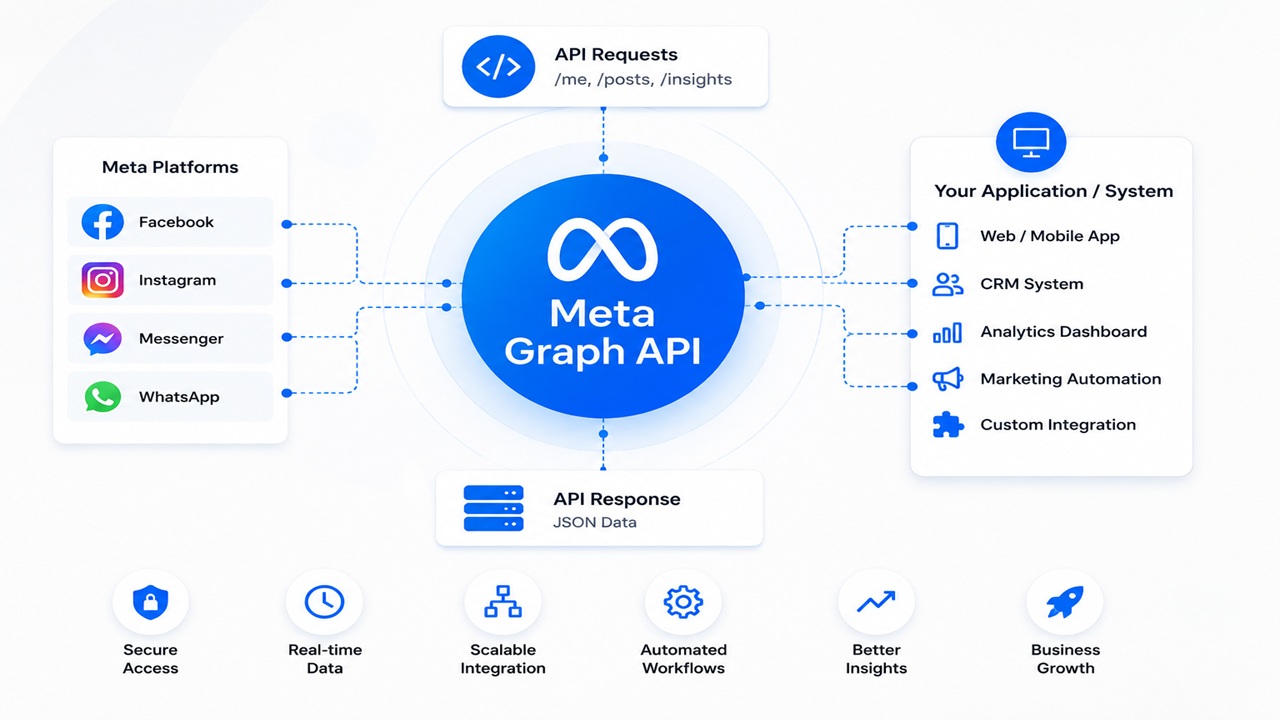
WhatsApp Cloud API is Meta’s hosted RESTful messaging service. Enterprises communicate with it by sending HTTP requests to versioned Meta Graph API endpoints. Meta delivers inbound messages, delivery status updates, and system events to the enterprise’s configured HTTPS webhook endpoint in real time.
Three infrastructure layers interact in every deployment:
1. The WABA layer:
Your WhatsApp Business Account the Meta-verified entity holding your phone number, display name, business profile, and template library.
2. The Graph API layer:
The interface through which all outbound messages are sent and account assets are managed.
3. The webhook layer:
Your own server endpoint that receives inbound events from Meta messages, delivery statuses, template approval updates, account status changes.
Meta Graph API: The Core Interface Behind Every Enterprise WhatsApp Message
Every API call that sends a WhatsApp message, registers a template, uploads media, or queries account analytics runs through the Meta Graph API at:
https://graph.facebook.com/v{API_VERSION}/{PHONE_NUMBER_ID}/messages
The version stamp matters. Meta maintains a rolling deprecation cycle on Meta Graph API versions. Enterprises on BSP-managed infrastructure are periodically caught by API version sunsets their BSP missed resulting in silent send failures mid-campaign.
Enterprise requirement: Know what Graph API version your BSP’s integration runs on. Know their documented process for version migration before a deprecation deadline hits.
WhatsApp Business API Pricing in 2026: The Per-Message Model, Fully Explained
WhatsApp Business API Pricing in has been Changed in 2026. Meta replaced its conversation-based pricing (CBP) model with per-message pricing (PMP). Businesses are now charged per individual delivered template message not per 24-hour conversation window. The charge depends on the message’s category and the recipient’s country code, not the sender’s location.
Conversation-based pricing is deprecated. Any BSP invoice, sales deck, or pricing guide still referencing “per conversation” billing is describing a dead model. Demand updated documentation from any vendor who hasn’t made this clear.
The Four WhatsApp Message Categories and Their 2026 Cost Logic
Meta classifies every WhatsApp Business API message into one of four categories. Each carries different pricing, different rules, and different compliance implications.
1. WhatsApp Marketing Messages
- Promotional content: offers, announcements, re-engagement campaigns, product recommendations.
- Always charged per delivered message no free window applies.
- No volume-based discount tier. Every WhatsApp marketing messaging carries the published per-message rate.
- Example India rate: approximately 0.0094 per delivered message (one of the lowest globally).
2. WhatsApp Utility Messages
- Transactional content: order confirmations, shipping notifications, appointment reminders, payment receipts.
- Free when sent within an open 24-hour Customer Service Window (CSW).
- Charged per message when sent outside a CSW.
- Volume-based tier discounts apply as monthly volume scales – progressively lower per-message cost at higher send volumes.
3. WhatsApp Authentication Messages
- One-time passwords and account verification codes.
- Always charged per message, even within an open CSW.
- Volume-based tier discounts apply.
4. WhatsApp Service Messages
- Non-template replies sent within an open CSW.
- Always free. No charge, no category cost, no limit within the service window.
Free Messaging Windows Enterprise Teams Are Systematically Underusing
Two free messaging windows exist. Most enterprise teams use neither efficiently.
1. Customer Service Window (CSW):
- Opens when a user sends your business any message.
- Lasts 24 hours from the user’s most recent message – not from your last reply.
- Within this window: all non-template messages are free. All utility templates are free.
- Misunderstanding this window costs enterprises significant template spend daily.
2. Free Entry Point (FEP) Window:
- Opens when a user initiates a conversation via a Click-to-WhatsApp (CTWA) ad on Facebook or Instagram.
- Lasts 72 hours from that first interaction.
- Within this window: all message categories – including marketing templates – are free.
- Enterprises running CTWA ad campaigns without FEP-aware automation are paying for messages that should cost nothing.
WhatsApp Business API Messaging Limits and Throughput in 2026
Two parallel constraint systems govern what enterprises can send on WhatsApp Business API. Both operate simultaneously. Understanding only one and most teams understand only one creates campaigns that fail in production.
System 1 – Messaging Limits (Daily Volume):
Daily WhatsApp Business API Messaging Limits depends Maximum unique users reachable via outbound template messages in a rolling 24-hour period.
System 2 – Throughput (Messages Per Second):
Maximum message dispatch speed before the Cloud API throttles your sends.
The October 2025 Portfolio Architecture Change That Rewrote Enterprise Planning
Before October 7, 2025, messaging limits applied per phone number. Enterprises could distribute volume across multiple numbers to artificially expand daily reach. That mechanism is gone.
Since October 7, 2025, messaging limits apply at the Business Portfolio level
shared across every phone number registered under a single Meta Business Manager. Adding a new phone number does not increase your portfolio’s limit. It inherits whatever tier your portfolio already holds.
How Automatic Tier Scaling Works in 2026
Meta no longer requires manual upgrade requests for tier progression. Since 2025, the system evaluates eligibility automatically every 6 hours (down from 24–48 hours previously).
Automatic scaling to the next tier triggers when:
- The portfolio uses at least 50% of its current daily limit consistently across 7 consecutive days.
- All phone numbers in the portfolio maintain a High quality rating throughout that period.
- Templates in active use carry strong delivery and engagement metrics.
The quality rating is the actual gating mechanism. Volume alone does not unlock tier progression. A portfolio sending 900 of its 1,000 daily messages – but generating block and report rates above Meta’s internal threshold – stays locked. Quality rating is determined by the ratio of messages delivered to block/report events received.
WhatsApp Business API Customer Service Window: The 24-Hour Rule Enterprises Consistently Misread
A Customer Service Window (CSW) on WhatsApp Business API opens when a user sends any message to a business. The window remains open for exactly 24 hours from the user’s most recent inbound message – not from the business’s last reply. Within this window, service messages (non-template) are free and utility templates are free.
The timestamp anchor is the critical operational detail. Most CRM automations log the business’s last response as the session timestamp. They should be logging the user’s.
How This Error Generates Unnecessary Template Spend – A Real Workflow Example
- 9:00 AM Monday: User messages your support number. CSW opens. Expires 9:00 AM Tuesday.
- 5:00 PM Monday: Your agent responds. CRM logs 5:00 PM as session timestamp.
- CRM automation flags: Session expires 5:00 PM Tuesday (wrong – adds 24 hours from wrong timestamp).
- 8:30 AM Tuesday: Correct CSW expires. User sends no new message.
- 8:45 AM Tuesday: Follow-up automation fires a paid Marketing template – because the CRM thinks the session is still valid.
The outcome: a charged template message sent when a free utility template or free-form message would have been technically valid 15 minutes earlier. At enterprise volume – tens of thousands of conversations daily – this logic error accumulates into significant monthly spend.
The fix: CRM automation must track user last message time stamp, not agent last reply time stamp, as the CSW expiry anchor.
Free Entry Point (FEP): 72 Hours of Free Messaging from Click-to-WhatsApp Ads
When a user initiates a WhatsApp conversation by clicking a CTWA ad on Facebook or Instagram, a Free Entry Point window opens. This window runs 72 hours from the initial interaction – and during that window, all message categories, including Marketing templates, are free.
This changes the economics of WhatsApp marketing campaigns built on paid Meta traffic.
An enterprise running CTWA ads and routing those leads through standard per-message billing – instead of detecting the FEP trigger and routing accordingly – is paying marketing message rates it should not be paying. The detection and routing logic is a webhook configuration decision, not a Meta setting. It requires implementation at the enterprise’s application layer.
What This Architecture Means for Enterprise Data Compliance
The E2EE architecture has three compliance implications that Indian enterprise legal teams consistently underestimate:
1. BSPs cannot archive your conversation content
Message content is decrypted only at the webhook delivery endpoint your own server. A BSP can log metadata (phone numbers, timestamps, template IDs) but not the actual message payload unless they are acting as the business’s webhook receiver and explicitly storing it. Enterprises that assume their BSP maintains a complete conversation archive for audit purposes need to verify this contractually before relying on it for regulated-sector compliance.
2. Meta processes but does not read message content
WhatsApp Cloud API temporarily stores messages for up to 30 days to guarantee delivery then permanently deletes them. Meta explicitly states it does not use Cloud API message data for advertising. The WhatsApp Cloud API is certified under SOC2, SOC3, and GDPR/LGPD compliance standards.
3. Metadata is not encrypted
Phone numbers, timestamps, and message frequency data are visible to Meta for service delivery and abuse detection. In regulated sectors, metadata exposure may be as significant a compliance consideration as content exposure.
Cloud API Local Storage for India: The Compliance Feature Most Indian Enterprises Have Never Heard Of
Meta offers a Cloud API Local Storage feature that restricts message data-at-rest to a specific geographic region. India is an explicitly supported APAC region within this feature. For BFSI enterprises operating under RBI data localization guidance, for healthcare platforms with patient data sensitivity requirements.
This regulatory framework is especially vital for regional operations scale. When deploying interactive pipelines for premium infrastructure launches, utilizing proper local storage compliance enables secure deployment of automated communication layouts like RCS Messaging for Real Estate campaigns across Jaipur.
Local Storage is not enabled by default. It must be requested through Meta Support for a specific WABA. It is not a standard BSP offering. it requires intentional architecture work at the deployment stage.
WhatsApp Business Features That Drive Enterprise Automation in 2026
WhatsApp Business API provides a programmatic feature set designed for enterprise communication workflows including interactive message types, WhatsApp Flows, product catalog integration, status webhooks, and multi-agent inbox architecture – all accessible through the Meta Graph API.
These features are not incremental upgrades to the consumer WhatsApp Business App. They are architecturally different, programmatically deeper, and unavailable outside the API.
Interactive Messages: Buttons, Lists, and CTA URLs
Three interactive message types change the engagement dynamic completely:
- Quick Reply Buttons (up to 3): Inline response options that fire a structured reply without the user typing. Used for survey triggers, support topic selection, yes/no confirmations.
- List Messages (up to 10 options): A structured menu-style interface used for product category selection, appointment time slot booking, FAQ option sets.
- Call-to-Action URL Buttons: Deep-link to external URLs – tracking pages, payment gateways, booking systems – with click-through tracked via webhook events.
Response rates on interactive message flows consistently outperform text-only message sequences in support and sales automation contexts.
WhatsApp Catalog and Product Messages for E-Commerce Enterprises
Product messages allow businesses to surface catalog items directly inside a WhatsApp conversation – with image, price, description, and an add-to-cart trigger – without routing the user to an external product page.
This requires:
- A synced product catalog in Meta Commerce Manager.
- Compliance with Meta’s E-Commerce Policy for the product category.
- API-level catalog integration via the WhatsApp Business Management API.
For e-commerce enterprises using WhatsApp as a D2C sales channel, product messages remove the single highest drop-off point in mobile commerce: the browser redirect.
Message Status Webhooks: The Attribution Layer Enterprise Teams Have Been Missing
Every message sent via WhatsApp Business API generates status events delivered to your webhook endpoint:
- sent – Message dispatched from Meta’s infrastructure.
- delivered – Message received by the recipient’s device.
- read – Message opened by the recipient (read receipts on by default in WhatsApp).
- failed – Delivery failure, with an associated error code.
This per-message delivery granularity is the attribution infrastructure that makes WhatsApp performance measurement materially more precise than email opens or SMS delivery reports. When properly ingested into a CRM or analytics stack, it enables campaign-level read rate tracking, agent-level response time measurement, and per-template performance benchmarking all at the individual message level.
How Arihant Global Architects WhatsApp Business API Deployments for Indian Enterprises
WhatsApp Business API access is a commodity. The WhatsApp Business Solution Provider in India is saturated with vendors selling access. What is not commodity and what determines whether your WhatsApp channel performs or quietly bleeds money – is the architecture that connects access to outcome.
That is what Arihant Global builds.
We are not a BSP. We do not resell API access. We design the full omnichannel communication infrastructure:
- BSP selection matched to your volume profile, sector compliance requirements, and data residency obligations – not to our referral margin.
- WABA architecture with enterprise-owned Business Manager setup, System User token configuration, and portfolio-level limit planning for your target scale.
- CRM integration with bi-directional WABA sync, CSW-state tracking (on the correct user timestamp), FEP-window detection, message-category routing, and attribution mapping into your existing analytics stack.
- Webhook infrastructure with asynchronous processing queues, retry-handling logic, and 5-second response compliance – built before your first high-volume campaign, not after your first outage.
- Compliance architecture for BFSI, healthcare, and edtech: opt-in documentation, Cloud API Local Storage configuration for India, E2EE data residency mapping, and audit log design that meets the specific requirements your legal team will present.
- Per-message cost optimization under the July 2025 PMP model: category routing to route utility messages within open CSWs, FEP-window routing for CTWA ad traffic, and volume-tier planning for utility and authentication discount thresholds.
The enterprises we work with do not have a WhatsApp access problem. They have a WhatsApp architecture problem hidden costs they can’t see, scale ceilings they can’t explain, and compliance gaps they haven’t yet been asked about.
Conclusion: Your WhatsApp Channel is an Architecture, Not an App
Treating WhatsApp Business API as a plug-and-play marketing tool is the fastest way to inflate your per-message costs, trigger spam blocks, and hit unexplained throughput ceilings. Scaling an enterprise communication pipeline in 2026 requires balancing message delivery rates against platform operational costs, while navigating strict data residency compliances.
Ready to stop paying for architecture errors?
If your current setup is bleeding utility template spend due to poor CSW tracking, or if you need to migrate to a compliant Cloud API Local Storage environment, it is time to evaluate your infrastructure. Connect with the enterprise architecture team at Arihant Global for a comprehensive WhatsApp API Readiness Audit, and let’s build a communication engine designed to scale securely.
About the Author
| Arihant Global Enterprise Communications Team
The Arihant Global team has spent over a decade designing and deploying WhatsApp Business API infrastructure for Indian enterprises across BFSI, e-commerce, healthcare, edtech, and real estate sectors. We have architected deployments ranging from 50,000 to 10 million messages per month, managed compliance frameworks for RBI-regulated financial institutions, and built the webhook and CRM integration patterns documented in this guide from direct production experience. Website: arihantglobal.in | Specialization: WhatsApp Business API infrastructure, omnichannel communication infrastructure, CPaaS platform deployment |
Disclaimer
This guide reflects Meta’s official WhatsApp Business Platform documentation as of May 2026. Pricing rates, messaging limits, tier thresholds, and API specifications are subject to change. Always verify current figures directly at developers.facebook.com/docs/whatsapp/ before making infrastructure or commercial decisions. This content does not constitute legal or financial advice.