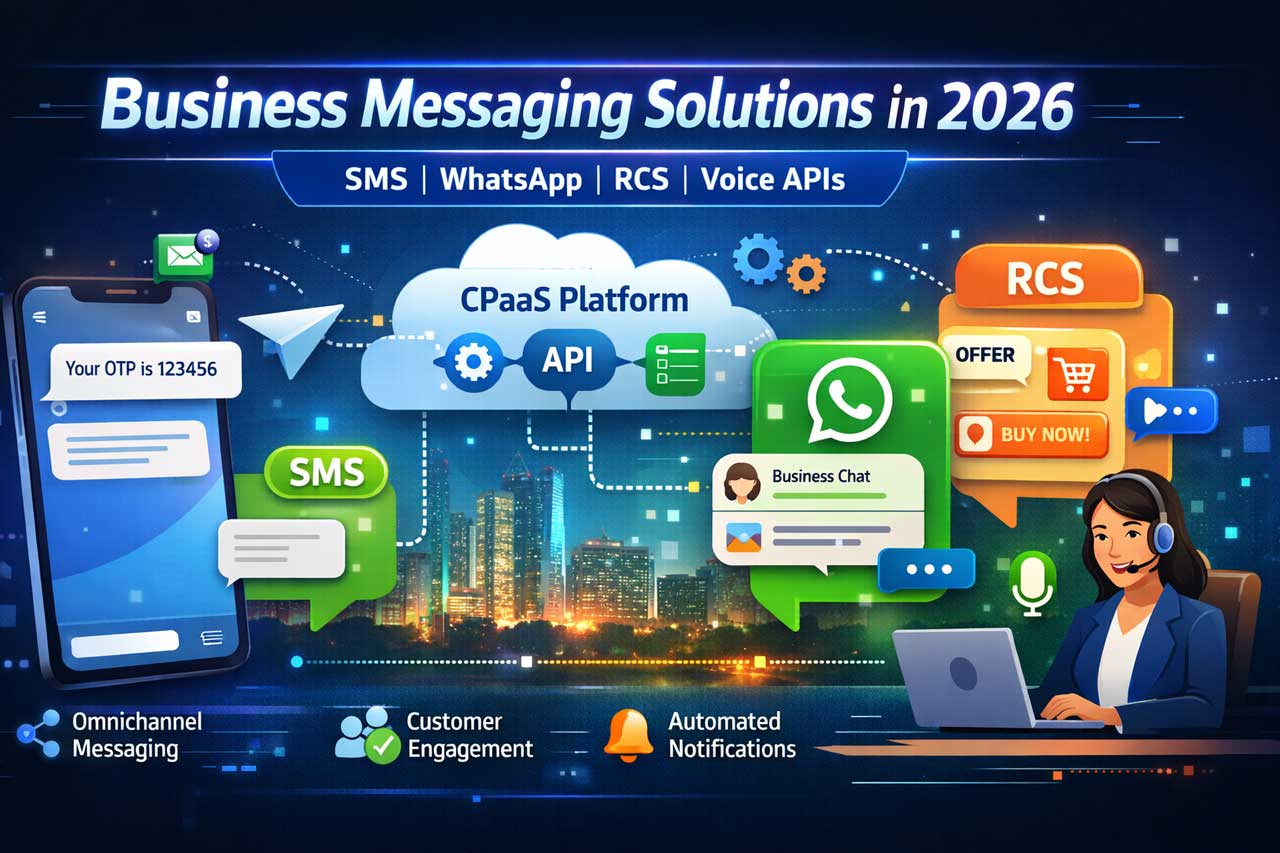
Best Business Messaging Solutions in 2026 (Full Guide)
Ultimate Guide to Business Messaging Solutions in 2026 (SMS, WhatsApp, RCS, Voice APIs)
You’ve probably experienced this yourself waiting for an OTP that takes forever, or a delivery update on WhatsApp that never comes. Most people don’t complain… they just lose trust and move on.
That’s the real problem.
Customers today expect instant communication. Not fast instant. And if a business can’t keep up, it quietly loses opportunities. This is exactly where Business messaging solutions come into the picture.
Instead of relying on one channel, businesses are now combining SMS, WhatsApp, and voice into a single system. Teams working with providers like Arihant Global have already seen how much smoother things become when communication is connected rather than scattered.
And honestly, once you see the difference, it’s hard to go back.
What Are Business Messaging Solutions?
At its core, business messaging solutions are tools that help businesses communicate with customers across multiple channels without juggling different systems.
This includes:
- SMS alerts and OTP verification
- WhatsApp conversations
- RCS campaigns
- Voice calls and IVR flows
- Automated notifications
Most of this runs on a Business communication platform powered by CPaaS platform, where messaging APIs handle everything in the background.
Instead of sending messages manually, the system triggers them based on user actions. Simple, but powerful.
Why Businesses Need Messaging Platforms in 2026
Customer behaviour has shifted more than most businesses realize.
- SMS open rates are often above 90%
- WhatsApp messages can reach 95–98% open rates
- Emails? Usually much lower
So it’s not just about sending messages it’s about choosing where customers actually respond.
A proper customer communication platform helps you:
- Reach users instantly
- Keep conversations consistent
- Reduce manual effort
- Track what’s working
When all channels work together, it becomes an omnichannel messaging platform and that’s where real engagement starts to happen.
Types of Messaging Channels
1. SMS (A2P Messaging & OTPs & Alerting)
SMS continues to be the primary form of communication for businesses. It works without an internet connection and provides delivery nearly instantly, so it is perfect for OTP verification and transaction alerts, as well as for alerts or messages that require immediate response.
A best Bulk SMS gateway will deliver messages efficiently as soon as they are sent. So, if speed is important to you, SMS is an excellent choice.
2. WhatsApp Business API
WhatsApp provides an additional way for businesses to communicate with their customers communication by way of conversation. Businesses using the WhatsApp Business API can send photos, pdfs, videos, automate replies to customers, and create campaigns for clients that allow conversations between a person and a company.
This is why many businesses utilize the WhatsApp Business API as a customer engagement tool.
3. RCS Messaging
RCS represents what SMS could’ve looked like if it had evolved sufficiently. RCS message consists of actionable buttons, rich media content and verifying businesses contacts. Consumers can perform actions through messages, such as promotions or campaigns.
As RCS continues to develop, it’s becoming very clear that their message direction is to foster greater interactions with users by reducing barriers to complete some type of activity in a message.
4. Voice API & IVR Systems
Not every situation works with text.
With voice API and IVR systems, businesses can:
- Handle support calls automatically
- Route users to the right department
- Provide instant responses
For support-heavy industries, voice still plays a key role.
SMS vs WhatsApp vs RCS
Between SMS vs WhatsApp vs RCS Here’s a clearer comparison:
| Feature | SMS | RCS | |
| Internet Needed | No | Yes | Yes |
| Open Rate | Very High | Very High | High |
| Media Support | Limited | Strong | Advanced |
| Interaction | Low | High | High |
| Best Use Case | OTPs, alerts | Engagement | Promotions |
Quick Insight:
- Need speed and reach → SMS
- Need conversation and engagement → WhatsApp
- Need interactive campaigns → RCS
👉 Most businesses don’t choose one. They combine all three as part of a customer communication strategy.
What is CPaaS Platform & How It Powers Messaging
CPaaS platform (Communication Platform as a Service) is what makes all this possible. Instead of building messaging systems from scratch, businesses use a cloud communication platform to:
- Send messages automatically
- Integrate APIs into apps or CRMs
- Scale communication without extra infrastructure
For example:
- A user signs up → OTP is sent instantly
- An order is placed → confirmation message triggers
- A lead comes in → WhatsApp follow-up starts
This is why CPaaS platform India adoption is growing quickly it saves time and simplifies everything.
Key Features of a Good Business Messaging Platform
Not every platform is worth using.
A strong one should offer:
- Fast and reliable delivery
- Simple messaging API integration for businesses
- Multi-channel support (SMS, WhatsApp, RCS, Voice)
- Basic automation workflows
- Clear analytics
Quick Checklist:
If your platform can’t handle automation + multiple channels together, it’s already outdated.
Use Cases (Real Examples)
1. eCommerce
- Order confirmations
- Delivery updates
- Cart recovery messages
2. Banking
- OTP verification
- Transaction alerts
- Security notifications
3. Startups
- Lead follow-ups
- Onboarding messages
- Support automation
4. SMEs
- Promotions
- Appointment reminders
- Feedback collection
Even small teams benefit from business messaging solutions for small business it reduces manual work more than expected.
How to Choose the Best Messaging Platform for Business
There’s no perfect answer, but a few things really matter:
- Channel coverage (SMS, WhatsApp, RCS, Voice)
- Delivery reliability
- API flexibility
- Compliance (DLT, telecom rules)
- Ease of use
Many businesses now prefer platforms that combine everything instead of managing separate tools.
It’s just easier that way.
Future Trends in Business Messaging (2026 Insights)
Messaging isn’t changing overnight… but it is evolving steadily.
What you’ll start noticing:
- More automation in conversations
- Smarter replies (AI-assisted, not fully AI-driven)
- Better personalization
- More interactive messaging formats
The shift is subtle, but important messaging is becoming less about sending updates and more about ongoing conversations.
FAQs
- What is a business messaging platform?
It is a system used by companies to send messages to their customers via SMS, Whatsapp, RCS and voice from a single application.
- What is the best medium for communicating with customers; SMS Whatsapp and/or RCS?
All three media have different uses. SMS has fast speed of delivery, while Whatsapp has high levels of interactivity, and RCS provides a high level of interactivity through messaging.
- What is CPaaS in Simple Terms?
The CPaaS platform allows businesses to add messaging capabilities to their current systems using easy-to-use API’s with no investment in new hardware required.
- How can business automatically communicate with Customers?
Businesses can utilize API functions, chatbots and workflows to send out automatic communications to consumers once specific actions occur.
- Does a business messaging platform help small businesses?
Yes, these services enable small companies to manage their communications much easier and will help improve their customer response rates.
Conclusion
Communication used to be simple: send a message and wait. That doesn’t work anymore. Today, businesses need fast, connected, and reliable communication systems. That’s exactly what business messaging solutions offer not just delivery, but consistency across channels.
If you’re planning to improve how your business connects with customers, moving to a unified messaging setup can make a real difference. Arihant Global Cpaas Platform bring SMS, WhatsApp, RCS, and voice together, so your communication feels faster, simpler, and more consistent.
Disclaimer
This text is only for knowledge purpose and should not be considered as professional advice. We try to be as accurate as possible but Arihant Global does not warrant any results or completeness of the final product. You are using this information at your own risk. For personalized solutions, professional consultation, compliance guidance, do not hesitate to reach out to our expert team.